The scooter pole fatigue testing machine is a high-precision durability testing device specifically designed for scooter poles (handlebar support poles, folding mechanisms). By simulating the repeated ...
The scooter pole fatigue testing machine is a high-precision durability testing device specifically designed for scooter poles (handlebar support poles, folding mechanisms). By simulating the repeated bending, torsion and impact loads applied during riding, it comprehensively assesses the fatigue strength, weld reliability, material toughness and structural stability of the poles. This equipment is widely used in scooter manufacturing, quality inspection centers, research and development laboratories, and export certification fields to ensure that products comply with international safety standards such as CE EN 14619, GB/T 17761, and CPSC 16 CFR Part 1500, thereby reducing the risk of user safety due to pole fractures.
Application scope
It is used to test the extent of impact from drops during transportation and handling of packaged items, and to evaluate the shock resistance of the packaging and the rationality of the packaging design.
Core functional modules
Core Functions
Multi-scenario Drop Testing
Free Drop Testing: Adjustable height (0.5 - 2m, expandable to 3m), simulating the accidental drop of a scooter onto different surfaces such as concrete and gravel.
Directional Impact Testing: Set specific angles (0° - 360°) and impact points (body, battery compartment, folding mechanism) to verify local impact resistance.
Continuous Drop Testing: An automatic reset device enables a single device to undergo continuous drops ≥ 100 times, testing cumulative damage effects.
Precise Data Collection
Impact Force Monitoring: A triaxial force sensor (accuracy ±1% FS) records the peak impact force at the moment of drop (0 - 10kN) in real time.
Deformation Analysis: A laser displacement sensor (accuracy ±0.1mm) captures the deformation of the vehicle body and generates a 3D deformation map.
Battery Safety Inspection: Monitors battery voltage, temperature, and sealing before and after the drop to verify explosion-proof and fire-resistant designs.
Intelligent Test Management
Pre-set Test Programs: Built-in standard test modes such as EN 14619 and CPSC 16 CFR Part 1500, with one-click start.
Data Traceability: Automatically generates PDF reports (including impact force curves and deformation data), supports QR code binding and cloud storage.
Core technologies and configurations
| Item | Parameter Range |
|---|---|
| Drop Height | 300–1500 mm (or as specified) |
| Max Test Specimen Weight | 60 kg, additional load test available (or as specified) |
| Max Test Specimen Dimensions | Max. 2700×800×1000 mmMin. 30×30×10 mm |
| Drop Angle Error | <1° |
| Drop Height Error | ±10 mm |
| Drop Mode | Face, edge, corner drop |
| Height Standard | Motor driven adjustment |
| Drop Control | Electromagnetic drop control; test can be started by pressing drop button |
| Reset Mode | Manual reset |
| Protection Function | Limit protection switches installed on upper and lower parts of main lifting rod |
| Overall Dimensions (LWH) | 1650×1400×2300 mm(Customizable per max test product size, subject to actual dimension) |
| Net Weight | Approx. 400 kg |
| Power Supply | AC 380 V, 50 Hz, 4 kW |
Product advantages
Technical Highlights
High-precision control: Servo motor-driven height adjustment with positioning accuracy of ±1mm and angle error ≤ ±0.5°.
Modular design: Quick replacement of drop test surfaces (steel plate, wood board, sandstone simulation layer), suitable for electric/non-electric scooters (wheel diameter 4~12 inches).
Safety protection: Fully enclosed protective cabin, photoelectric safety interlock, emergency stop button, compliant with ISO 13849 mechanical safety standards.
Energy-efficient and high-performance: Pneumatic/electric reset system, single test cycle ≤ 30 seconds, energy consumption < 500W.
Equipment Advantages
High efficiency and accuracy: Single drop test cycle ≤ 1 minute, data repeatability error < ±1%.
Comprehensive coverage: Supports free fall, directional impact, and multi-angle continuous drop tests.
Cost optimization: Early exposure of structural defects, reducing after-sales disputes and brand reputation losses.
Standard compliance: Built-in test procedures such as EN 14619 and ASTM D5276, directly generating certification reports.
Application scenarios and industry value
Production quality inspection: Batch drop tests before leaving the factory to screen out potential hazards such as frame cracks and loose battery compartments.
Research and development verification: Optimization of vehicle body materials (such as magnesium alloy and carbon fiber) and buffer structure design.
Certification testing: Mandatory drop test items in certifications such as CE, UL, and CPSC.
After-sales analysis: Defect reproduction and process improvement for drop damage issues reported by users.
After-sales Service
Warranty Policy: Most manufacturers offer a one-year full machine warranty, supporting remote fault diagnosis and operation training.
Customization Service: Customization based on requirements, including custom fixtures and software functions according to testing standards (such as JIS/CNS) to meet special needs.
After-sales Service: One-year full machine warranty, providing operation training and remote technical support.
Data Service: Optional cloud data platform for generating CNAS-compliant test reports remotely.
Technical Support: Free remote debugging, operation training, and annual equipment calibration services.
Spares Supply: Quick replacement service for consumable parts (fixtures, hydraulic seals).
Ordering Process
Requirement Communication: Provide test standards and relevant parameters.
Plan Confirmation: The supplier provides 3D drawings and parameter lists.
Production and Delivery: 15-20 days for standard models, 30-45 days for non-standard custom models.
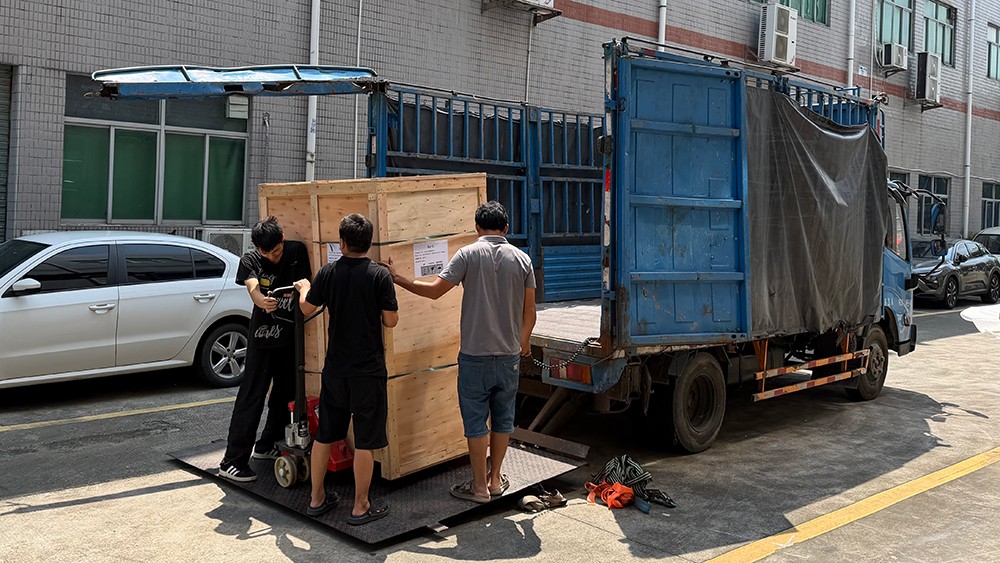
Acceptance and Training: Engineers install and debug on-site and provide on-site training.