The temperature-controlled battery short circuit tester is a high-precision safety detection device specifically designed for lithium-ion batteries, power batteries, and energy storage batteries. By p ...
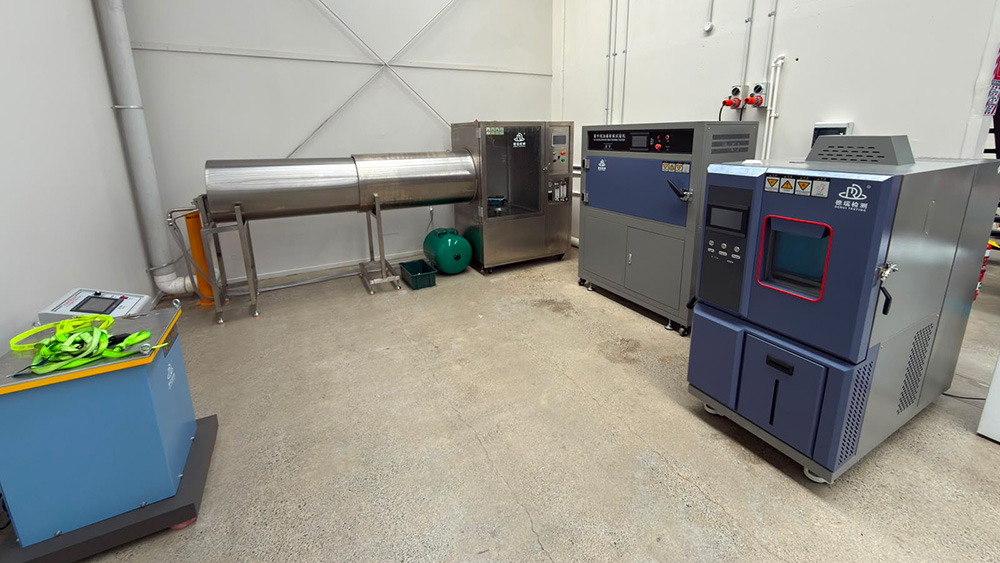
The temperature-controlled battery short circuit tester is a high-precision safety detection device specifically designed for lithium-ion batteries, power batteries, and energy storage batteries. By precisely controlling the environmental temperature (-40°C to +150°C) and triggering an internal short circuit in the battery, it comprehensively assesses the battery's thermal runaway characteristics, pressure relief valve response, electrolyte leakage, and explosion-proof performance under extreme temperature rise conditions. This equipment is widely used in battery research and development, production quality inspection, certification institutions, and energy storage system verification, ensuring that products comply with international safety standards such as UL 1642, IEC 62133, and GB 31241, providing scientific guarantees for the safety of the battery throughout its life cycle.
Application scope
Used for the control system testing of electric scooters.
Core functional modules
Precise Temperature Control Short-Circuit Testing
Environmental Temperature Control Simulation:
1. Temperature range: -40°C to +150°C (heating rate ≥ 5°C/min), simulating the short-circuit response of batteries in extremely cold, hot, or rapidly changing temperature conditions.
2. Optional humidity control (10% to 95% RH) to verify the impact of humid environments on short-circuit safety.
Internal Short-Circuit Triggering:
1. Mechanical puncture (tungsten steel needle, stroke accuracy ±0.01mm) or forced overcharging (0 to 100V/0 to 500A), simulating real failure scenarios.
2. Supports testing at the cell, module, and pack levels.
Multi-Dimensional Safety Monitoring
Real-Time Data Collection:
1. Voltage/current (accuracy ±0.1% FS), surface/internal temperature (infrared thermal imager ±0.5°C), gas composition (CO, H₂, etc.).
2. High-speed camera (1000fps) captures transient processes such as pressure relief valve opening and electrolyte ejection.
Thermal Runaway Analysis:
1. Records the thermal runaway trigger temperature (T1), maximum temperature (Tmax), and temperature rise rate (dT/dt), generating a thermal diffusion curve.
Safety Protection and Risk Control
Triple Explosion-Proof Design
Explosion-proof test chamber (pressure resistance ≥ 2MPa), pressure relief and diversion channel, automatic fire suppression system (CO₂/inert gas).
Intelligent Early Warning System:
AI algorithm predicts thermal runaway risks (such as sudden voltage drop, abnormal temperature gradient), and triggers protective mechanisms in advance.
Core technologies and configurations
| Item | Parameter Range |
|---|---|
| Impulse Voltage | AC 1 kV / 1.2–50 μs (peak), 1 min |
| DC Response Time | 4 μs |
| Max Short-Circuit Current | 1000 A |
| Internal Resistance | 80 mΩ |
| Mechanical Life | ≥ 300,000 cycles |
| Temperature Range | Ambient ~ +100 ℃ (adjustable) |
| Temperature Fluctuation | 0.5 ℃ |
| Temperature Uniformity | 2 ℃ |
| Current Measurement Range | 0–1000 A DC |
| Current Measurement Accuracy | 0.5% F.S. |
| Sampling Rate | 0.3 s |
| Voltage Measurement Range | 0–100 V |
| Temperature Measurement Range | 0–1000 ℃ |
| Temperature Measurement Accuracy | 1 ℃ |
| Temperature Control Range | -40 ℃ ~ +150 ℃ (standard type) |
| Temperature Uniformity | ≤ ±1 ℃ |
| Puncture Speed & Accuracy | 1–100 mm/s, ±0.01 mm |
| Voltage / Current Range | 0–100 V / 0–500 A (accuracy ±0.1% FS) |
| Data Sampling Frequency | 10 kHz (electrical parameters) / 100 Hz (full parameters) |
| Power Supply | AC 380 V / 50 Hz (peak power ≤ 20 kW) |
Product advantages
Technical Highlights
High-precision temperature control system: PID closed-loop control, temperature uniformity ≤ ±1℃, supports step/cyclic temperature change modes.
Modular design:
1. Quick fixture replacement (compatible with cylindrical, square, and pouch batteries), compatible with single cell to pack-level testing.
2. Optional vacuum/low-pressure environment module (simulates high-altitude transportation scenarios).
Data traceability: Automatically generates PDF reports (including thermal imaging, gas analysis, video records), supports integration with MES/QC systems.
Equipment Advantages
Safe and reliable:
1. Certified to ISO 13849 (PLd level) safety standards, explosion-proof chamber can withstand ≥ 2MPa impact.
2. Remote monitoring and automated operation, achieving "zero-contact" testing.
Highly efficient and accurate:
1. Single test cycle ≤ 30 minutes, data repeatability error < ±1%.
2. Supports multi-station parallel testing (optional 2-4 stations), efficiency increased by 300%.
Cost optimization:
1. Precisely locates design defects, reducing recall losses due to safety issues.
2. Energy feedback technology (optional) reduces test energy consumption by 40%.
Application scenarios and industry value
Battery R&D: Optimizing the stability of the SEI film, electrolyte formula, and the puncture resistance of the separator.
Production quality inspection: Batch detection of short-circuit risks caused by process defects in battery cells (such as metal foreign objects, electrode sheet burrs).
Certification testing: Mandatory short-circuit safety items in standards such as UL 1642, UN 38.3, and GB 38031.
Energy storage system validation: Evaluation of thermal diffusion suppression capability at the module/PACK level.
After-sales Service
Warranty Policy: Most manufacturers offer a one-year full machine warranty, supporting remote fault diagnosis and operation training.
Customization Service: Customization based on requirements, including custom fixtures and software functions according to testing standards (such as JIS/CNS) to meet special needs.
After-sales Service: One-year full machine warranty, providing operation training and remote technical support.
Data Service: Optional cloud data platform for generating CNAS-compliant test reports remotely.
Technical Support: Free remote debugging, operation training, and annual equipment calibration services.
Spares Supply: Quick replacement service for consumable parts (fixtures, hydraulic seals).
Ordering Process
Requirement Communication: Provide test standards and relevant parameters.
Plan Confirmation: The supplier provides 3D drawings and parameter lists.
Production and Delivery: 15-20 days for standard models, 30-45 days for non-standard customized models.
Acceptance and Training: Engineers will install and debug on-site and provide training.