The throttle life test machine is a high-precision durability testing device specifically designed for the throttle systems of automobiles, motorcycles, electric vehicles, etc. (mechanical pedals, ele ...
The throttle life test machine is a high-precision durability testing device specifically designed for the throttle systems of automobiles, motorcycles, electric vehicles, etc. (mechanical pedals, electronic throttles, and drive-by-wire systems). It comprehensively verifies the mechanical life, sensor accuracy, circuit stability, and material durability of the throttle mechanism by simulating frequent user pedal operations, extreme temperature and humidity environments, and load changes. This equipment is widely used in automotive parts manufacturing, vehicle manufacturers, R&D laboratories, and certification institutions to ensure that products comply with international standards such as ISO 26262, SAE J1939, and GB/T 18384, thereby reducing the risk of control safety hazards caused by throttle failure.
Application scope
Used for the throttle life detection of scooters.
Core functional modules
Dynamic Load Testing
High-frequency Pedal Simulation: Set the pedal frequency (1 to 20 times per second) and stroke range (0 to 100%), simulating scenarios such as urban congestion and aggressive driving.
Load Spectrum Replication: Import real driving data (such as torque demand curves) to replicate the relationship between throttle pedal force and angle (force range 0 to 500N, accuracy ±0.5% FS).
Environmental Coupling Testing
Temperature and Humidity Simulation: Optional high and low temperature chambers (-40°C to +120°C, humidity 10% to 95% RH) to verify the signal drift risk of electronic throttle sensors in extreme environments.
Vibration and Shock Testing: Superimpose random vibration (5 to 200Hz, acceleration 10g) and mechanical shock (50g, half-sine wave) to detect loose mechanical structures or cracked solder joints.
Intelligent Monitoring and Diagnosis
Multi-parameter Synchronous Acquisition: Real-time monitoring of pedal force, displacement (accuracy ±0.01mm), sensor signals (voltage/resistance), and temperature changes (±0.5°C), generating life decay curves.
Failure Warning: AI algorithms analyze signal fluctuations (such as potentiometer jumps, Hall element failure), triggering shutdown and locating the fault point.
Data Traceability: Automatically generate PDF reports (including raw data and compliance conclusions), supporting MES system integration and cloud backup.
Core technologies and configurations
| Item | Parameter Range |
|---|---|
| Drive | Stepper motor |
| Torsion Angle | 0–360° adjustable |
| Torque | 0–10 N·m ±0.5% FS |
| Test Speed | 0–40 cycles/min |
| Dwell Time | 0–999 s (presettable) |
| Test Cycles | 1–999999 cycles |
| Torque Holding Time | 0–999 s adjustable |
| Dimensions (LWH) | 580×400×400 mm |
| Weight | 35 kg |
| Power Supply | AC 220 V, 50 Hz, 3 A, 1000 W (or as specified) |
Product advantages
Technical Highlights
High-precision drive system: Servo motor + ball screw closed-loop control, displacement repeatability accuracy ±0.005mm, dynamic response ≤ 5ms.
Modular design: Quick fixture replacement (compatible with mechanical pedals, electronic throttles, and by-wire drive modules), compatible with various types of vehicles including passenger cars, motorcycles, and electric vehicles.
Safety protection: Overload protection, emergency stop, electrical isolation, meeting ISO 13849 (PLc level) mechanical safety standards.
Energy-efficient and high-performance: Energy feedback technology can recover 40% of the energy during testing, standby power consumption < 100W.
Equipment Advantages
High efficiency and accuracy: 1 million pedal tests can be completed within 7 days, with data repeatability error < ±0.5%.
Comprehensive coverage: Supports testing of all types of throttle systems including mechanical, electronic, and by-wire, compatible with SAE J1939 and CAN bus protocols.
Cost optimization: Through accelerated life testing, the R&D cycle is shortened by 50%, and road test costs are reduced.
Standard compliance: Built-in ISO 26262 functional safety testing process, directly generating ASPICE/ISO 21434 compliant reports.
Application scenarios and industry value
Automobile manufacturing: Durability verification and batch sampling inspection of accelerator pedal assemblies and electronic throttle sensors.
Motorcycle industry: Anti-wear and return spring fatigue testing of cable-operated throttles.
New energy sector: Circuit stability and EMC interference resistance testing of drive-by-wire throttles in electric vehicles.
After-sales analysis: Defect reproduction and improvement verification for user-reported accelerator lag and sticking issues.
After-sales Service
Warranty Policy: Most manufacturers offer a one-year full machine warranty, supporting remote fault diagnosis and operation training.
Customization Service: Customization based on requirements, including custom fixtures and software functions according to testing standards (such as JIS/CNS) to meet special needs.
After-sales Service: One-year full machine warranty, providing operation training and remote technical support.
Data Service: Optional cloud data platform for generating CNAS-compliant test reports remotely.
Technical Support: Free remote debugging, operation training, and annual equipment calibration services.
Spares Supply: Quick replacement service for consumable parts (fixtures, hydraulic seals).
Ordering Process
Requirement Communication: Provide test standards and relevant parameters.
Plan Confirmation: The supplier provides 3D drawings and parameter lists.
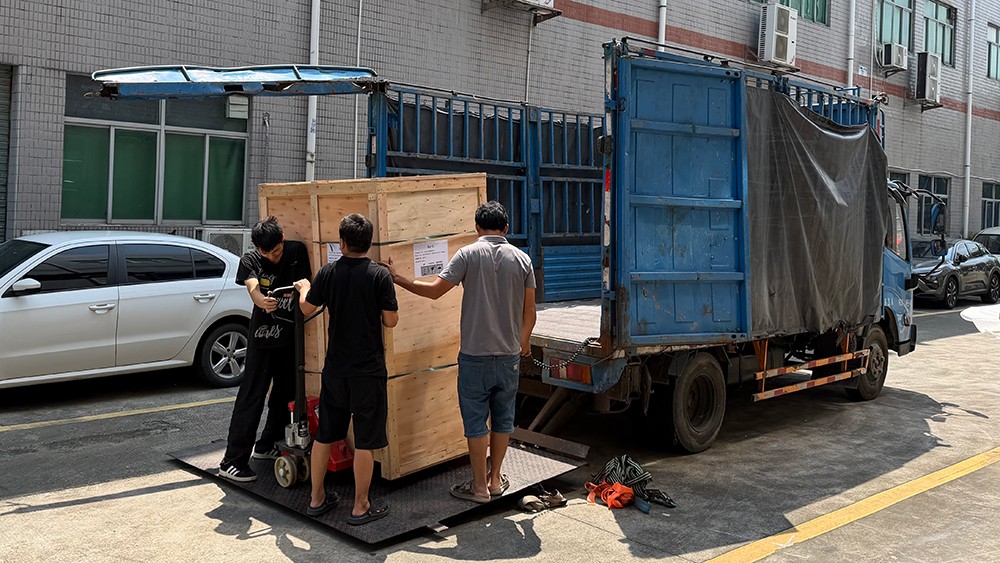
Production and Delivery: 15-20 days for standard models, 30-45 days for non-standard custom models.
Acceptance and Training: Engineers install and debug on-site and provide on-site training.