The pedal and handlebar load-bearing testing machine is a dedicated device specifically designed to simulate the static or continuous loads exerted by human weight and operating force on the key contr ...
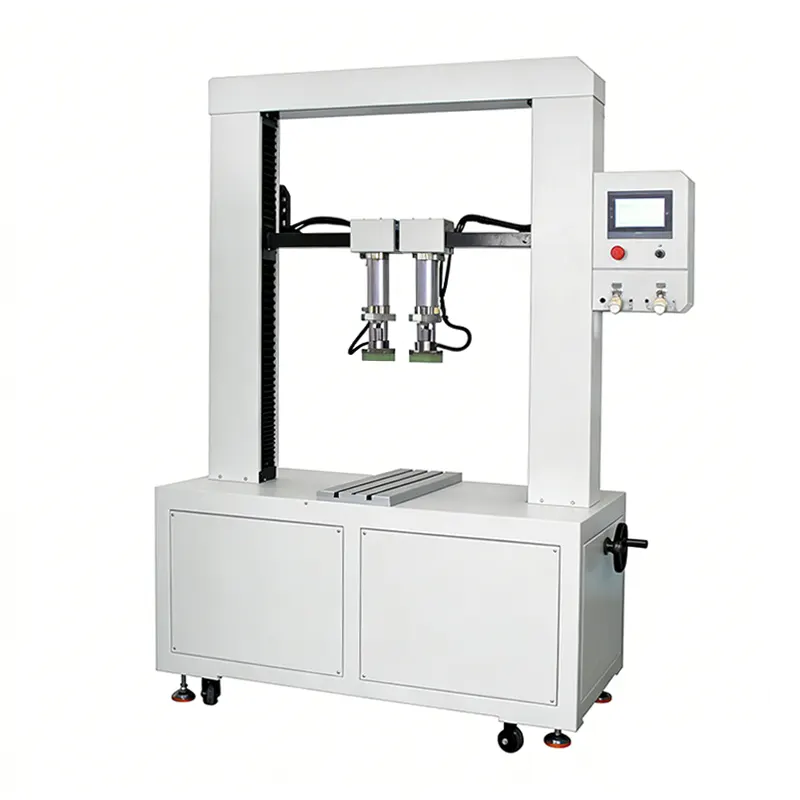
The pedal and handlebar load-bearing testing machine is a dedicated device specifically designed to simulate the static or continuous loads exerted by human weight and operating force on the key control components (pedals/pedal assemblies and handlebars/stem assemblies) of bicycles, electric bicycles and scooters, in order to verify their structural strength, rigidity and fatigue resistance.
Technical parameters
| Parameter | Specification / Range |
|---|---|
| Machine Structure | All-steel rigid structure, adjustable spacing: approx. 300 mm, connecting plate fixed with manual screw locking |
| Servo Cylinder | 2 sets (horizontal actuation ×1 set; vertical actuation ×1 set) |
| Servo Cylinder Horizontal Actuation | Performs bidirectional tension and compression |
| Sensor Capacity | 5000 N disc-type sensor |
| Horizontal Actuation Stroke | ±75 mm |
| Vertical Actuation Stroke | ±50 mm |
| Test Frequency | 0–5 Hz |
| Displacement Sensor | Accuracy ±1%, ±0.5% calibration accuracy (static) |
| Force Closed-Loop Control (1 set fully automatic force adjustment) | Sensor dynamic control accuracy ±5% |
| Power Supply | 220V / 50Hz |
| Provided Test Fixture Set | For frame vertical and horizontal testing |
Test purpose
1. Foot pedal (pedal):
Static load-bearing: Simulate a person with a relatively large body weight standing on one foot on the pedal, and check whether the pedal body bends or breaks, as well as whether the pedal shaft (the connection point with the crank) deforms.
Dynamic fatigue: Simulate the repeated pedaling of both feet during long-distance cycling to check the durability of the pedal bearings, the wear of the pedal anti-slip studs, and the loosening of the axle thread.
2. Handlebar/Steering Tube:
Handlebar clamp force: Verify whether the clamping force of the handlebar clamp that fixes the handlebar to the head tube and fork steerer is sufficient and whether it will rotate and slide under force.
Handlebar bending strength: It simulates the deformation and fracture risk at the middle or end of the handlebar when the rider exerts downward pressure with both hands or pedals vigorously during cycling.
End load-bearing: The impact or static load that the end of the handlebar bears when simulating a crash or leaning on it.
Applicable Standards
1. Bicycle Standards:
ISO 4210-4: Bicycles - Safety requirements (Part 4: Test methods for braking, involving handlebar actuating force).
ISO 4210-5: Bicycles - Safety requirements (Part 5: Test methods for handlebars and handlebar stems) - including handlebar stem bending fatigue, handlebar clamping torque, etc.
ISO 4210-8: Bicycles - Safety requirements (Part 8: Test methods for pedals and drive systems) - Including dynamic durability and static strength of pedals.
GB 3565: Safety Requirements for Bicycles (Chinese National Standard, corresponding to ISO 4210).
2. Electric bicycle standards:
GB 17761-2024: Safety Technical Specification for Electric Bicycles (Referring to the requirements for pedals and handlebars in relevant bicycle standards).
EN 15194: European standard for electrically assisted bicycles (the strength requirements for handlebars and pedals may increase slightly due to the increase in the overall weight of the vehicle).
3. Scooter Standards:
EN 14619: Wheeled recreational vehicles - Scooters - Safety requirements and test methods (involving handlebar strength and footboard load-bearing capacity).