Verify the response speed, speed regulation accuracy, overload protection, EMC immunity and thermal management performance of the controller. This equipment is widely used in controller production, ve ...
Verify the response speed, speed regulation accuracy, overload protection, EMC immunity and thermal management performance of the controller. This equipment is widely used in controller production, vehicle assembly, R&D laboratories and certification institutions to ensure that products comply with international standards such as ISO 26262, EN 15194 and UL 2272, providing scientific guarantees for the safety and reliability of the electronic control system.
Application scope
It is used to check whether the output voltage of the electric scooter charger meets the specifications, and the charger charges at a constant current of 5A.
Reference standard: GB/3565
Core functional modules
Constant Current/Constant Voltage Testing
Simulate the charging load through a servo motor or torque controller, apply constant current (such as 5A) or constant voltage tests to the charger, and check if the output voltage/current meets the specifications (such as 42V/2A, 24.2V/1A, etc.).
Support compatibility testing for a wide voltage input range (such as 100-240V AC) to verify the charger's performance in different grid environments.
Fatigue Life Testing
Accelerate the aging of the charger through high-frequency cycle charging and discharging (such as tens of thousands of times or more), and evaluate its stability and component lifespan under long-term use.
Protection Function Detection
Integrate safety function tests such as overcurrent protection (such as 130% overload), overvoltage protection (115%-135%), short circuit protection, and temperature protection to ensure the charger automatically cuts off the output under abnormal conditions.
Compatibility Verification
Support multiple interface tests (such as 5.5×2.1mm, microphone head, Anderson head, etc.) to meet the connection requirements of different brand scooter chargers.
Core technologies and configurations
| Item | Parameter Range |
|---|---|
| Drive Mode | Servo motor + torque controller 1 / PLC control |
| Test Current / Voltage | Constant current 5A, output voltage 12–58.8V (customizable) |
| Test Frequency | Continuous or intermittent test supported, frequency adjustable |
| Applicable Standards | CE, UL, FCC, PSE, UKCA and other certification requirements |
| Dimensions (LWH) | 460×310×300 mm |
| Data Recording | Real-time display of voltage, current, power curve; data export and analysis supported |
| Power Supply | AC 220V 15A, 4kW |
Product advantages
Technical Highlights
High-precision power simulation: Programmable DC power supply + electronic load, dynamic response time ≤ 1ms, ripple noise < 10mVrms.
Modular design: 1) Supports quick replacement of test fixtures (compatible with controllers of different pin definitions), compatible with brushless/brush motor drive solutions.
2) Optional battery simulator (BMS communication), motor simulation module (back EMF simulation).
Safety protection: Overvoltage/overcurrent/short circuit protection, emergency stop, isolation transformer, compliant with CE/UL electrical safety standards.
Data traceability: Automatically generates PDF reports (including waveform diagrams, protocol analysis, fault logs), supports MES system integration.
Equipment Advantages
High efficiency and accuracy: Single test cycle ≤ 3 minutes, supports multi-station parallel testing (optional 4-8 channels), efficiency improvement of 400%.
Comprehensive coverage: 1) Full-dimensional testing of electrical performance, environmental adaptability, communication protocols, and EMC.
2) Compatible with controller types for scooters, balance bikes, electric bicycles, etc.
Cost optimization: Reduces repair rate by over 50% through early defect identification, lowering after-sales costs.
Standard compliance: Built-in ISO 26262 functional safety test process, one-click generation of ASPICE/ISO 21434 compliance reports.
Application scenarios and industry value
Production quality inspection: It is used for quickly screening out substandard chargers on the production line, reducing after-sales risks.
Research and development optimization: Through fatigue testing, design flaws (such as insufficient heat dissipation and component aging) are exposed, guiding improvement plans.
Certification testing: Meeting safety standards such as EN 60335 and GB/T 36944, facilitating product export certification.
After-sales Service
Warranty Policy: Most manufacturers offer a one-year full machine warranty, supporting remote fault diagnosis and operation training.
Customization Service: Customization based on requirements, including custom fixtures and software functions according to testing standards (such as JIS/CNS) to meet special needs.
After-sales Service: One-year full machine warranty, providing operation training and remote technical support.
Data Service: Optional cloud data platform for generating CNAS-compliant test reports remotely.
Technical Support: Free remote debugging, operation training, and annual equipment calibration services.
Spares Supply: Quick replacement service for consumable parts (fixtures, hydraulic seals).
Ordering Process
Requirement Communication: Provide test standards and relevant parameters.
Solution Confirmation: The supplier provides 3D drawings and parameter lists.
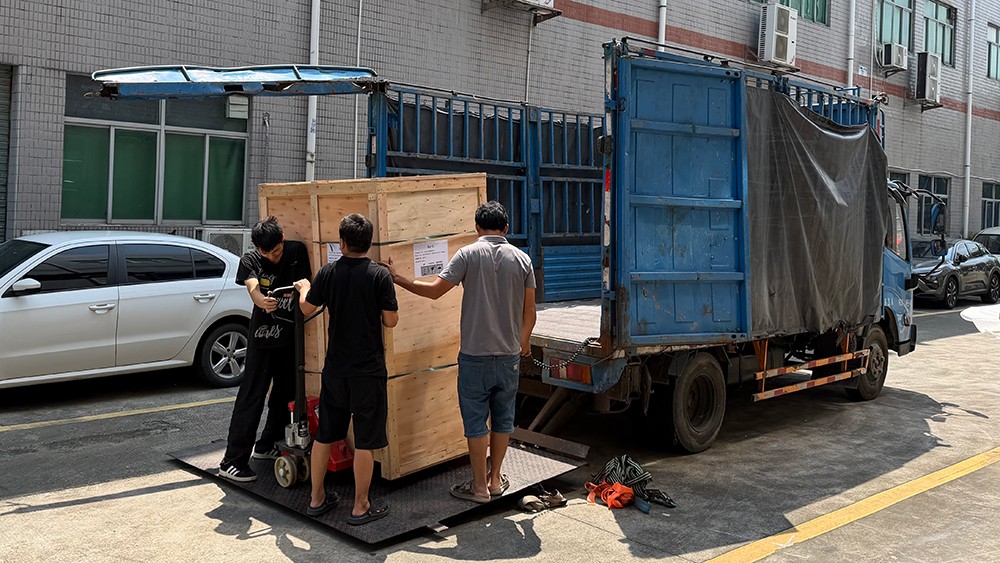
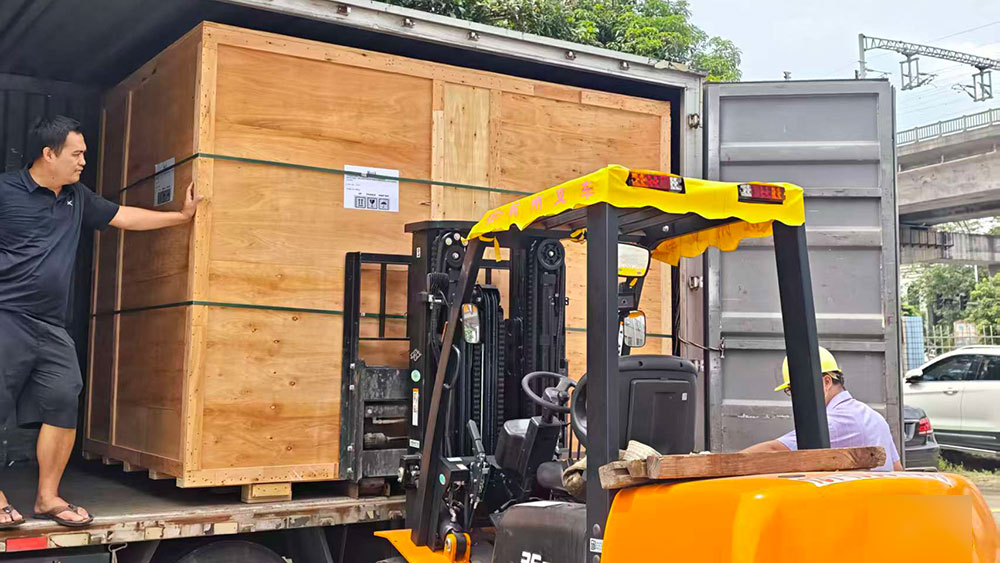
Production and Delivery: 15-20 days for standard models, 30-45 days for non-standard custom models.
Acceptance and Training: Engineers will install and debug on-site and provide training.