The refrigerator door opening and closing test machine is a professional testing device used to evaluate the durability, opening and closing performance, and reliability of the door and hinge systems ...
The refrigerator door opening and closing test machine is a professional testing device used to evaluate the durability, opening and closing performance, and reliability of the door and hinge systems of refrigerators, freezers, and other household appliances during long-term use. By simulating manual door opening and closing actions, combined with load testing and automated control, it verifies whether the products meet national and industry standards. The following is a detailed introduction to the common functions and technical highlights of multiple devices.
Compliance: GB/T8059 series, ISO15502, IEC60335, EN14846 and other domestic and international standards.
Core Technology and Functions
Core Functions
Durability Testing: Simulates the repeated opening and closing actions of refrigerator doors or drawers to test the fatigue life of components such as hinges, handles, and seals. Supports testing for upright, side-by-side, multi-door, and French door refrigerators.
Intelligent Control: Utilizes PLCs (such as Mitsubishi, XINJE brands) and touch screens (Weineng, Siemens, etc.) to set parameters (such as opening angle, speed, and frequency) and provide real-time monitoring. Supports automated cycle testing and abnormal alarm.
Multi-functional Adaptability: Adaptable to different sizes and types of refrigerator doors (single door, French door, drawer type, etc.) through adjustable mechanical arms, vacuum suction cups (with strong adsorption force and no damage to the door body), and modular fixtures.
Technical parameters
Test range:
Door opening angle: 0 - 180° (adjustable, commonly 45° or 60°)
Test speed: 10 - 32 times per minute (some devices support stepless speed regulation)
Maximum test times: 999,999 times (some devices can reach one million times)
Load capacity:
Some models support door swing tests (such as applying 50N force to simulate the impact of a quick door closure), or measure the door opening force value through a tensile force sensor.
Typical application scenarios Application scenarios
R&D verification: Helps optimize the hinge structure, sealing performance and reliability of electronic interlock devices, shortening the product launch cycle.
Quality control: Used for batch inspection at the production end to ensure product lifespan meets national standard requirements (such as GB4706.13-2014).
Industry applications: Main customers include home appliance manufacturers (such as Haier and Midea), third-party testing institutions and research institutes. Product advantages
✅ Dual-mode collaborative testing: Plug and twist operations are carried out simultaneously, increasing efficiency by 40% and better simulating real working conditions.
✅ Military-grade precision: ±0.1N force value resolution, accurately capturing minute performance degradation of the lock core.
✅ Modular expansion: Optional force feedback handle, multi-axis vibration table and other modules are available, compatible with automotive electronic lock ECU testing.
✅ Super long durability: Equipped with titanium alloy test fixtures and German linear motors, the uninterrupted operation life is ≥8 years.
After-sales Service
Turnkey Project: Free customization of track lock fixtures (samples required). Data Service: Optional cloud data platform for remote generation of test reports in compliance with CNAS standards. Training System: Specialized courses on lock mechanics analysis (including FEA simulation basics) are provided.
Technical Support: Free remote debugging, operation training, and annual equipment calibration services.
Spares Supply: Quick replacement service for consumable parts (fixtures, hydraulic seals) is available.
Ordering Process
Requirement Communication: Provide test standards and relevant parameters.
Solution Confirmation: The supplier provides 3D drawings and parameter lists.
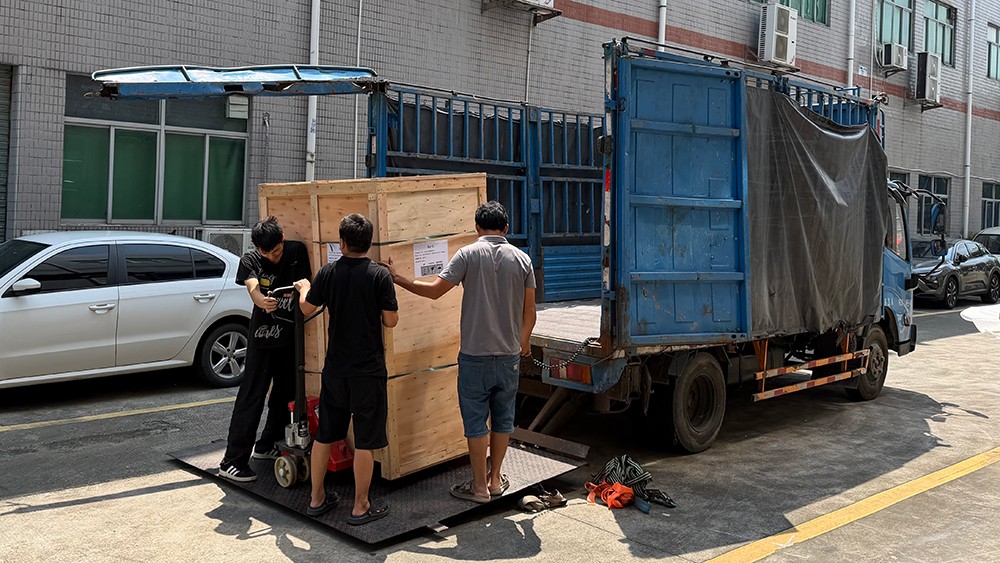
Production and Delivery: 15-20 days for standard models, 30-45 days for non-standard custom models.
Acceptance and Training: Engineers will install and debug on-site and provide training.