Grinding is an indispensable process in the preparation of metallographic specimens. The grinding process is generally divided into two steps: rough grinding and fine grinding. The purpose of rough gr ...
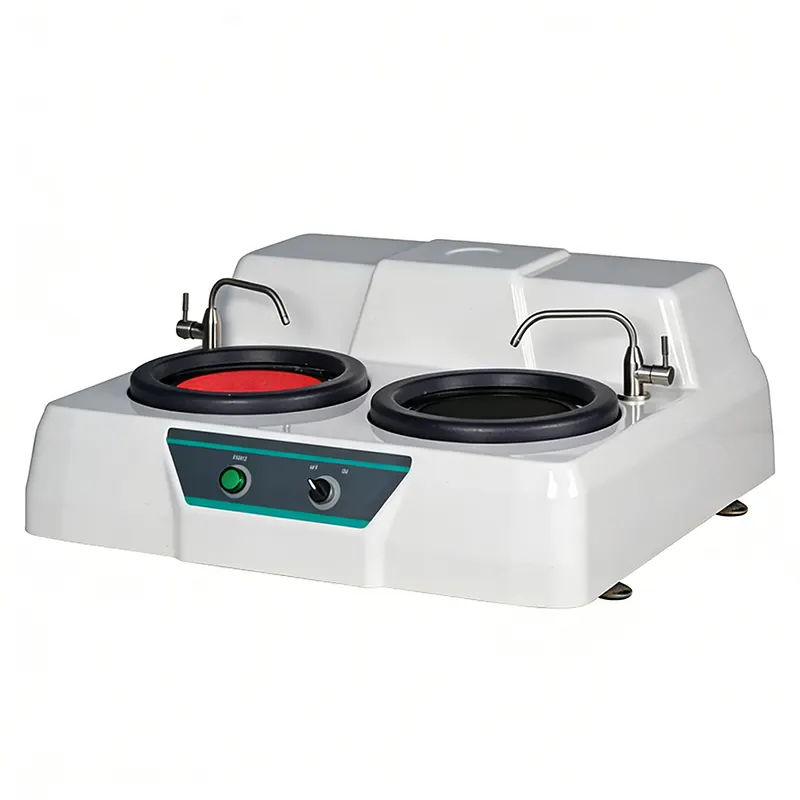
Grinding is an indispensable process in the preparation of metallographic specimens. The grinding process is generally divided into two steps: rough grinding and fine grinding. The purpose of rough grinding is to obtain a flat surface, which is usually done on a grinding wheel machine. The surface of the specimen still has deep marks. The purpose of fine grinding is to eliminate these marks to obtain a flat and smooth grinding surface, preparing for the next polishing step. The DR-M-2 metallographic specimen pre-grinding machine can be used for fine grinding of metallographic specimens. It has a double-disc design, allowing two people to operate simultaneously. The shell is made with an integrated vacuum forming technology, presenting a novel appearance. It features smooth rotation, low noise, convenient operation, and high working efficiency. It also comes with a built-in cooling device, which can cool the specimen during grinding and polishing to prevent damage to the metallographic structure due to overheating. It is suitable for metallographic laboratories in factories, colleges and universities, and research institutions.
Structure and Composition
1.Motor and transmission mechanism
Provide power to drive the grinding wheel/sandpaper disc to rotate; the power is generally between 250 W and 750 W, and the speed is adjustable within the range of 200 to 1500 rpm.
2.Grinding wheel / Sandpaper disc
Circular disc surface, with different grits of sandpaper attached; there are also models that use open grinding wheels.
3.Sandpaper clamping system
Quick clamping and replacement of sandpaper, some support automatic adsorption or magnetic fixation.
4.Cooling system
The nozzle sprays water onto the grinding area to cool it down, prevent dust and extend the life of the sandpaper.
5.Sample clamping device
Use hand-held or simple fixtures to ensure that the specimen is parallel to the disk surface and subjected to uniform force.
6.Shell and protective cover
Prevent splashing of cooling water and ejection of sand particles to enhance safety.
Technical parameters
| Parameter | Specification | Parameter | Specification |
|---|---|---|---|
| Grinding Disk Diameter | Φ203 mm (Φ230 mm, Φ250 mm customizable) | Input Power | 370W |
| Grinding Disk Speed | 450 rpm | Overall Dimensions | 730 × 765 × 320 mm |
| Input Voltage | Single phase 220V 50Hz | Weight | 47 kg |
| Model | Product Name | Unit | Qty |
|---|---|---|---|
| DR-M-2 | Metallographic Specimen Pre-Grinding Machine | unit | 1 |
| Product Accessories | Unit | Qty | Remarks |
|---|---|---|---|
| Grinding Disk | pc | 2 | Installed on machine |
| Water Retaining Ring | pc | 2 | Installed on machine |
| Clamping Ring | pc | 2 | Installed on machine |
| Waterproof Abrasive Paper | sheet | 2 | Φ203 mm |
| Inlet Hose | pc | 1 | Φ12 mm |
| Drain Hose | pc | 1 | Φ32 mm |
| Technical Documents | 1. Product Manual (1 copy) 2. Product Certificate (1 copy) |
Key Points and Precautions for Operation
1. Sample Fixation and Posture
Keep the sample surface parallel to the grinding plate to avoid excessive grinding on one side, which may cause a slant or warping.
2. Pressure Control
Apply more force during rough grinding, but reduce the pressure during fine grinding to prevent deep scratches or thermal damage.
3. Rotate 90° Gradually
After each change of sandpaper grade, rotate the sample by 90° to identify and remove old grinding marks by the direction of new grinding marks.
4. Adequate Cooling and Cleaning
When wet grinding, ensure that the water flow covers the grinding area; after each process, rinse the sample with clean water to remove residual grinding debris.
5. Timing for Sandpaper Replacement
Replace the sandpaper when the abrasive grains become dull, clogged, or the scratches are obviously uneven, otherwise false structures may be introduced.
6. Safety Precautions
Wear protective glasses and gloves, pay attention to waterproofing and preventing electric shock; do not wear gloves when operating rotating parts to prevent entanglement.