This machine is a dedicated testing device for the anti-torsion strength and durability of locks. It is used to evaluate the anti-torsion performance of core components such as lock cores, keys, and l ...
This machine is a dedicated testing device for the anti-torsion strength and durability of locks. It is used to evaluate the anti-torsion performance of core components such as lock cores, keys, and lock tongues, simulating torque loads in real scenarios like violent lock-picking and frequent lock opening, to ensure that the locks meet anti-theft safety standards (such as C-level lock cores ≥ 4000N·m). It is applicable to the research and development, production, and certification testing of mechanical locks, electronic locks, padlocks, car steering wheel locks, and other products.
Core Technology and Functions
Dynamic/Static Torque Testing
Destructive Testing: Determine the ultimate torsional strength of the lock cylinder/ key (adjustable from 0 to 5000 N·m), record the torque value at the moment of fracture and the deformation curve.
Cyclic Torsion Testing: Simulate repeated unlocking actions (forward/reverse rotation, frequency 1-30 times/minute) to detect failure modes such as gear wear and metal fatigue in the lock cylinder.
Intelligent Control and Data Analysis
Multi-mode Programming: Supports various testing modes including constant torque, angle increment, and random load.
Data Recording: Real-time display of torque-angle curves, automatically generate test reports (PDF/Excel), marking key parameters such as yield point and fracture point.
Environmental Adaptability Testing (Optional)
Salt Spray Corrosion Testing: Simulate high-salt environments according to ASTM B117 standards to verify the corrosion resistance of coated lock cylinders.
High and Low Temperature Testing: -40°C to 120°C temperature control chamber, test the impact of low-temperature embrittlement or high-temperature softening on the strength of the lock body.
Typical application scenarios
Lock development:
Verify the elastic retention rate of the reset spring after 100,000 compressions (≥90% is qualified), and optimize material selection (such as 304 stainless steel vs. piano wire).
Test the ultimate tensile strength of high-load springs (such as those in anti-theft door handles) (≥1500N).
Production quality inspection:
Batch test the initial spring force consistency (within ±5% of the standard value), and eliminate deformed or broken defective products.
Conduct a 48-hour salt spray test to verify the corrosion resistance of galvanized springs (no red rust is qualified).
Supply chain verification:
Provide third-party test reports for spring suppliers to ensure incoming materials meet contract parameters (such as a lifespan of ≥50,000 times).
Certification testing:
Generate test reports that comply with CE, FCC, UL, and other certifications to support market access in international markets.
Quality control:
Test core indicators such as lock tongue fatigue and fingerprint module durability (100,000 press tests) before mass production.
Applicable customer groups:
Smart lock manufacturers (such as Kaiti, Deshiman, Luke)
Smart home quality inspection laboratories
Fingerprint lock manufacturers (such as Kaiti, Asia-Pacific Tian Neng, VOC)
Third-party testing laboratories (such as SGS, TÜV)
Security engineering integrators (requiring batch acceptance of door locks)
Technical parameters
| Item | Specifications |
|---|---|
| Test Station | 4 stations (independently driven, expandable to 6 stations) |
| Test Frequency | 5–60 cycles/min (stepless speed regulation) |
| Max Load | 500 N per station (servo motor driven, accuracy ±1%) |
| Opening & Closing Life Test Cycles | 0~999,999 times (with power-off memory) |
| Compliance Standards | EN 1935:2002, QB/T 3874-2018 |
| Power & Air Supply | AC 380V±10%, power 3.5kW |
| Control Mode | 7-inch touch screen + PLC control, supporting data export (Excel/PDF) |
After-sales Service
Warranty Period: One-year warranty for the entire machine, and three-year warranty for core components (sensors, motors).
Technical Support: Free remote debugging, operation training, and annual equipment calibration services.
Spares Supply: Quick replacement service for consumable parts (jigs, hydraulic seals) is provided.
Ordering Process
Requirement Communication: Provide test standards, load range, and mechanical foot dimensions.
Solution Confirmation: The supplier provides 3D drawings and parameter lists.
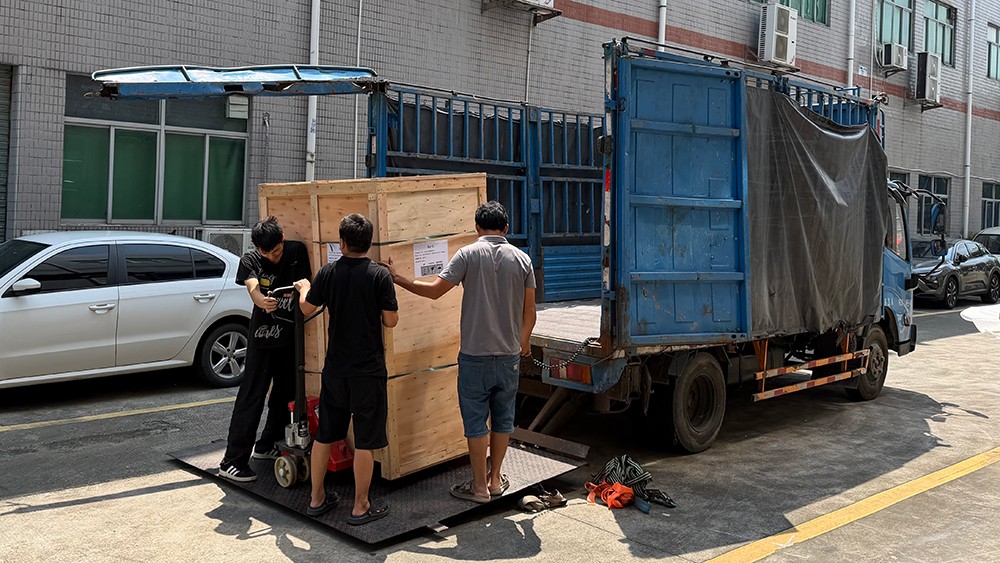
Production and Delivery: 15-20 days for standard models, 30-45 days for non-standard custom models.
Acceptance and Training: Engineers install and debug on-site and provide on-site training.