Focusing on the development of tennis racket reciprocating fatigue testing equipment, it targets carbon fiber / aluminum alloy racket frames, carbon shafts and other components, simulating the recipro ...
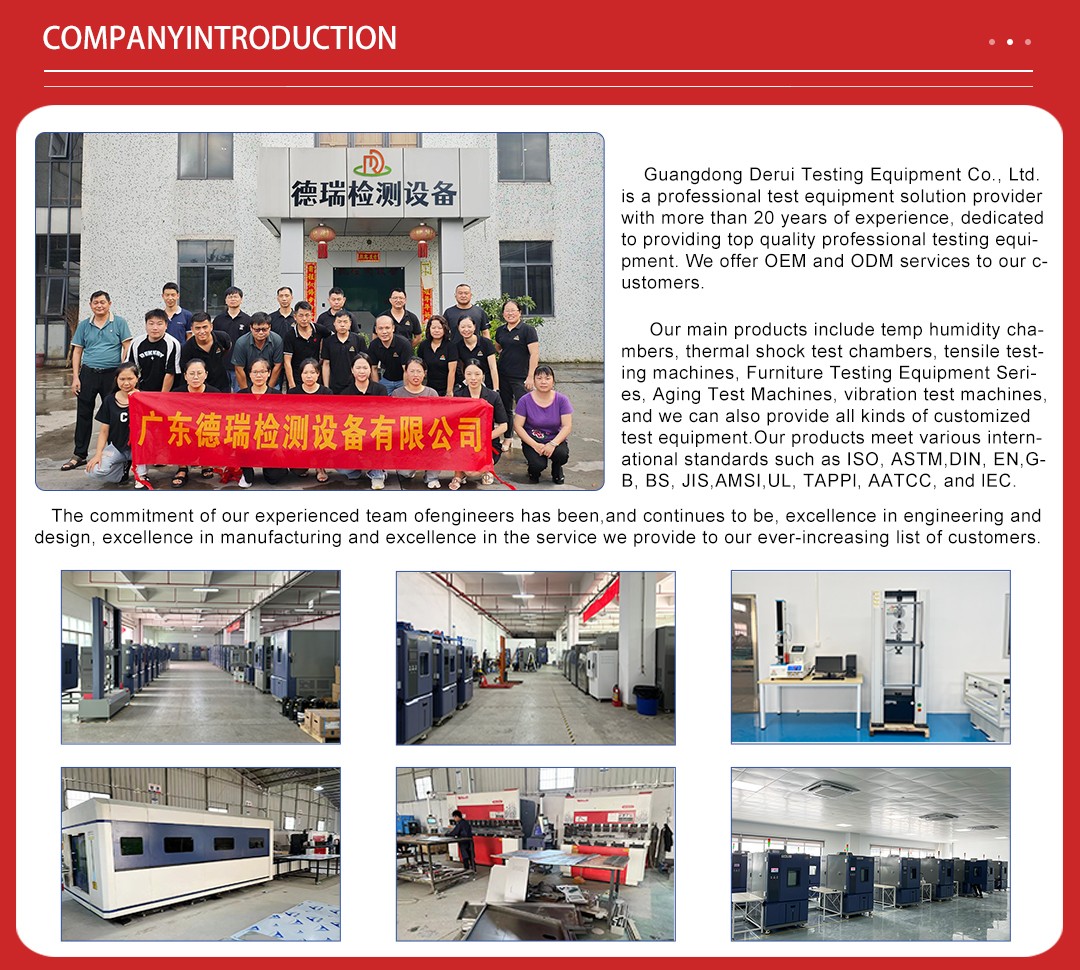
Focusing on the development of tennis racket reciprocating fatigue testing equipment, it targets carbon fiber / aluminum alloy racket frames, carbon shafts and other components, simulating the reciprocating load scenarios of high-speed swings and powerful shots in actual play, accurately detecting fatigue life, crack initiation points and mechanical property degradation. The equipment supports frequency adjustment from 0 to 250 times per minute (to adapt to different swing speeds) and dynamic load from 0 to 200N (covering professional-level hitting force), equipped with Swiss imported force sensors and 3D motion trajectory tracking systems, strictly conforming to ASTM F2219 and ITF racket testing standards. It is suitable for new product development of tennis racket manufacturers (such as fatigue verification of lightweight designs), mass production quality inspection (endurance screening of racket frame weld points), and third-party laboratory compliance certification. Customized stringing hole / grip-specific fixtures are available. Factory direct supply, providing lifetime calibration services and industry testing white papers. Consult equipment parameters and tennis brand cooperation cases immediately!
Product Overview
This machine uses air pressure as the driving force to perform bidirectional bending and squeezing on beach tennis rackets, causing fatigue to test the quality of the rackets. Moreover, this machine uses balls to contact the racket surface, which is closer to the actual usage scenario.
Relevant parameters
| Item | Parameter Range |
|---|---|
| Capacity | 30~100 kgf adjustable |
| Frequency | 30~60 cycles/min adjustable |
| Fulcrum Spacing | Max. 700 mm adjustable |
| Dimensions | 90×50×100 cm (WDH) |
| Weight | Approx. 80 kg |
| Power Supply | 1∮, 220V, 5A |
| Maximum Load | 800 N (expandable to 1500 N) |
| Test Frequency | 1~50 Hz (optional up to 100 Hz) |
| Displacement Accuracy | ±0.001 mm (laser ranging) |
| Temperature Control Range | -30℃ ~ +70℃ (optional liquid nitrogen cooling to -80℃) |
| Data Sampling Frequency | 10 kHz (dynamic parameters) / 1 kHz (full parameters) |
Core Functions
Multi-mode Fatigue Testing
1. Professional-level hitting simulation:
. Reciprocating bending load 0~800N (accuracy ±0.5% FS), frequency 1~50Hz (sine wave/triangle wave/custom waveform), reproducing forehand baseline strokes (equivalent hitting speed 200km/h) and high-pressure smashes.
. Synchronous torsional load 0~60N·m (±0.5% FS), simulating the torsion of the racket face at the moment of hitting (such as the force on a side spin ball), to detect fatigue cracks at the connection of the racket throat.
2. String bed fatigue testing: Dynamic monitoring of string bed tension decay (accuracy ±1 pound), supporting 16×19, 18×20 and other string hole layouts, analyzing the impact of stringing techniques on fatigue life.
Environmental Coupling Testing (Optional)
1. Extreme temperature and humidity testing: Temperature -30℃~+70℃ (temperature control accuracy ±0.5℃), humidity 10%~95% RH, verifying the thermal deformation and low-temperature brittleness risk of carbon fiber/epoxy resin.
2. Salt spray corrosion testing: Simulating coastal environments according to ASTM B117 standards (≥1000 hours), testing the anti-corrosion performance of metal parts (racket throat screws, shock absorbers).
Intelligent Monitoring System
1. Comprehensive data collection:
. Six-axis force sensor (±0.1% FS) captures X/Y/Z forces and torque in real time, laser displacement sensor (±0.001mm) monitors racket frame deformation.
. High-speed infrared thermal imager (±1℃) tracks temperature rise in stress concentration areas, 3D digital image correlation (DIC) generates full-field strain maps.
2. AI predictive maintenance: Deep learning algorithms analyze vibration spectra (5~5000Hz) and load curves to predict the risk of racket frame delamination and string bed breakage, automatically stopping the machine and pushing maintenance solutions.
3. Data interconnection: Supports integration with MES/ERP systems, one-click generation of ITF-compliant reports (including S-N curves, failure location heat maps), and supports blockchain data verification.
Technical Highlights
1. Professional-level simulation accuracy:
- Dual servo motors + planetary gear reducers drive, dynamic response ≤ 3ms, waveform distortion rate < 0.5%, supports Nadal-style topspin and Federer-style flat stroke programming.
- Modular fixtures compatible with mainstream racket types (Wilson Pro Staff, Babolat Pure Drive), clamping force 50~500N continuously adjustable.
2. Bionic mechanics simulation: Six-degree-of-freedom mechanical arm equipped with bionic racket head (hardness adjustable), reproduces real hitting angles (0~45°) and contact times (1~5ms).
3. Safety and energy-saving design:
- Fully enclosed explosion-proof cabin (pressure resistance ≥ 15MPa), triple emergency stop protection, vibration isolation foundation, complies with ISO 13849 (PLe level) safety certification.
- Energy feedback system saves ≥ 40% energy, noise < 55dB (silent mode).
Equipment Advantages
1. Competitive-level testing efficiency:
- A single machine can simulate the annual training volume of a professional player (≥500,000 hits) in 8 hours, with data repeatability error < ±0.3%.
- Supports four-position parallel testing (optional), increasing efficiency by 500%.
2. Flexible expansion:
- Compatible with racket face sizes of 97 to 110 square inches, string bed tensions of 40 to 70 pounds, and a maximum load of 1500N (expandable).
- Optional UV aging and dynamic balance testing modules (swing weight deviation ≤ 0.5g·cm) are available.
3. Cost innovation:
- Laboratory testing replaces actual player testing, reducing R&D costs by 70% and shortening the new product launch cycle to 3 months.
- Reduces the risk of racquet breakage during events through defect prediction, maintaining the brand's professional reputation.
4. Global compliance: Built-in 20+ testing protocols from ITF, ATP, WTA, etc., and can generate multi-language certification reports (Chinese/English/Japanese/European standards) with one click.
Application scenarios and industry value
Full inspection in mass production: 100% fatigue screening of rackets before leaving the factory to ensure that the lifespan deviation of the same batch is ≤ ±3% (ITF tournament-level standard).
Customization of professional equipment:
. Optimize the carbon fiber layup and shock absorption system of the racket frame (such as Wilson shock absorption handle) based on the player's style (baseline type / serve and volley type).
. Compare the data of competing products (such as Babolat PD vs Head Speed Pro torsional stiffness).
Material research and development: Verify the fatigue resistance improvement effect of new materials (liquid metal carbon fiber, graphene-reinforced epoxy resin).
Compliance certification for events: ITF professional racket certification, Grand Slam event racket access testing.
The tennis racket reciprocating fatigue testing machine, through professional-level mechanical simulation and AI-driven analysis, upgrades product verification from "laboratory data" to "tournament-level reliability", helping brands conquer the performance peak of professional equipment. Whether it is customizing championship rackets for top players or endowing mass-produced products with ITF tournament genes, this device can serve as the core engine of technological innovation, injecting new possibilities into the technological boundaries of competitive sports.