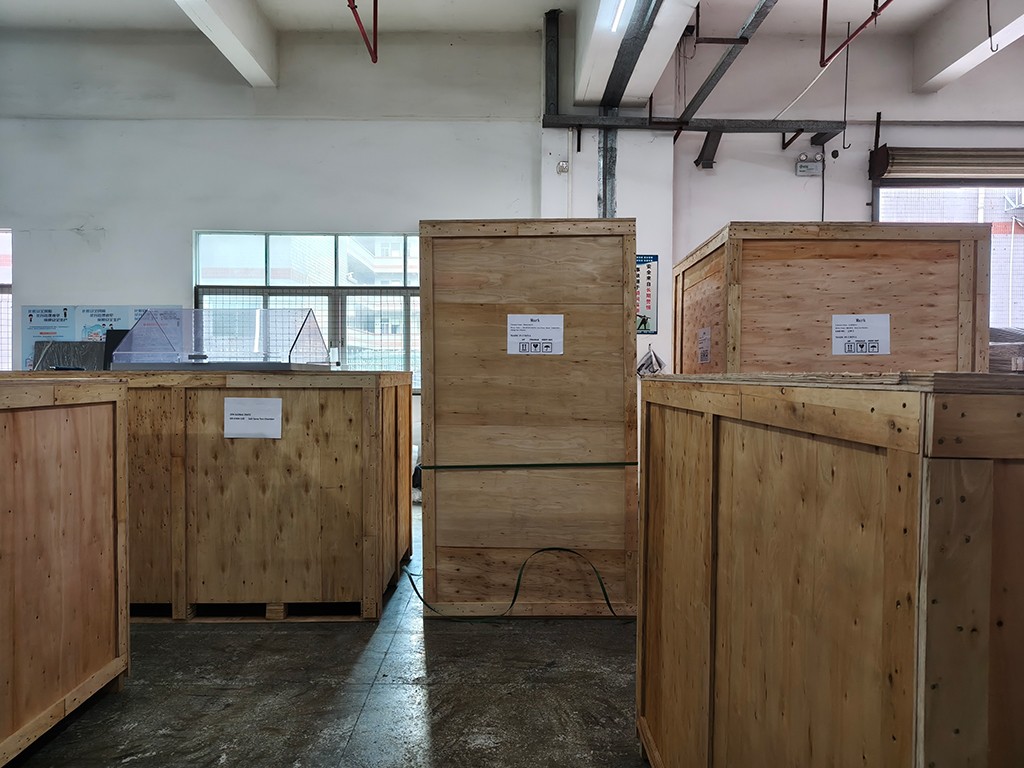
The hub air tightness tester is used for the air tightness detection of tubeless automobiles. It is suitable for the air tightness detection of motorcycle and car hubs. It adopts the hydraulic clampin ...
The hub air tightness tester is used for the air tightness detection of tubeless automobiles. It is suitable for the air tightness detection of motorcycle and car hubs. It adopts the hydraulic clamping clamping method and conducts the detection through the bubble method. The hydraulic clamping fixture seals the upper and lower end covers of the hub, and the high-strength sealing gasket is used for the upper and lower sealing.
Technical parameters
| Parameter | Specification |
|---|---|
| Maximum Pneumatic Test Pressure | 0.5 MPa |
| Clamping Method | Hydraulic fixture clamping |
| Automotive Clamping Fixture Stroke | 500–700 mm |
| Test Method | Air bubble leak test |
| Water Tank Stroke | 250–400 mm |
| Water Tank Volume | 45–1500 mm (Note: unit as specified) |
| Wheel Height Clearance Range | 220 mm – 800 mm |
| Overall Dimensions | 1380 × 1200 × 2700 mm |
| Motor Dimensions | 700 × 450 × 700 mm |
Applicable Standards
1. Bicycles/Electric Bicycles:
GB/T 1702: Series of bicycle tyres (with air-tightness requirements).
GB 17761-2024: Safety Technical Specification for Electric Bicycles (Indirect requirements for the ability to maintain tire pressure).
ISO 5775: Bicycle tyres and rims (involving fit dimensions, indirectly affecting air tightness).
2 Motorcycles:
GB/T 13203: Test Methods for Performance of Motorcycle Tires (Including Air Tightness Test)
3 General Standards:
ISO 28981: Motorcycles - Light alloy wheels - Method for air tightness test (specifically for air tightness testing of light alloy rims).
Special considerations for different products
1. For rims of vacuum tires on ordinary bicycles/electric bikes
Test focus: Shape accuracy and surface finish of the bead seat area.
The difficulty in testing lies in the fact that the fit between the rim and the tire is a "soft contact", and the differences in manual installation can affect the test results.
Solution: To eliminate human installation errors, when conducting batch spot checks, the testing machine is usually equipped with standard test tires and an automatic tire installation mechanism to complete the tests in a standardized manner.
2. For hub motors
This is an object with high testing difficulty because there are many parts that need to be sealed and their shapes are irregular.
Test Focus:
Sealing rings between the left and right end covers and the rim shell: This is the most common leakage point.
Motor shaft lead-out hole: The lead-out hole for power lines and Hall lines, usually sealed with rubber plugs or by filling with glue.
Bearing position: Although it is theoretically difficult to seal rotating parts, water is usually not desired to enter the motor interior. Therefore, the labyrinth seal or oil seal at the bearing position needs to be inspected.
Test plan:
Overall sealing: A complex pneumatic gripper-type sealing fixture needs to be designed to clamp the motor housing from both sides, while a probe-type sealing head is used to block the wire outlet hole at the shaft end.
Cavity testing: Sometimes it is necessary to distinguish between the "tire cavity" and the "motor cavity", and test them separately or test the intercommunication between them.
3. For large-sized/heavy-duty wheel hubs
Fixture load-bearing capacity: When testing heavy-duty electric motorcycle or light motorcycle wheel hubs, the load-bearing capacity of the fixture and the convenience of operation should be taken into account (possibly requiring the assistance of a mechanical arm for handling).
Safety protection: For tests with high pressure (such as automotive grade) and large hub volumes, a high-strength safety shield must be equipped to prevent splashing from excessive inflation pressure or hub defects causing rupture.