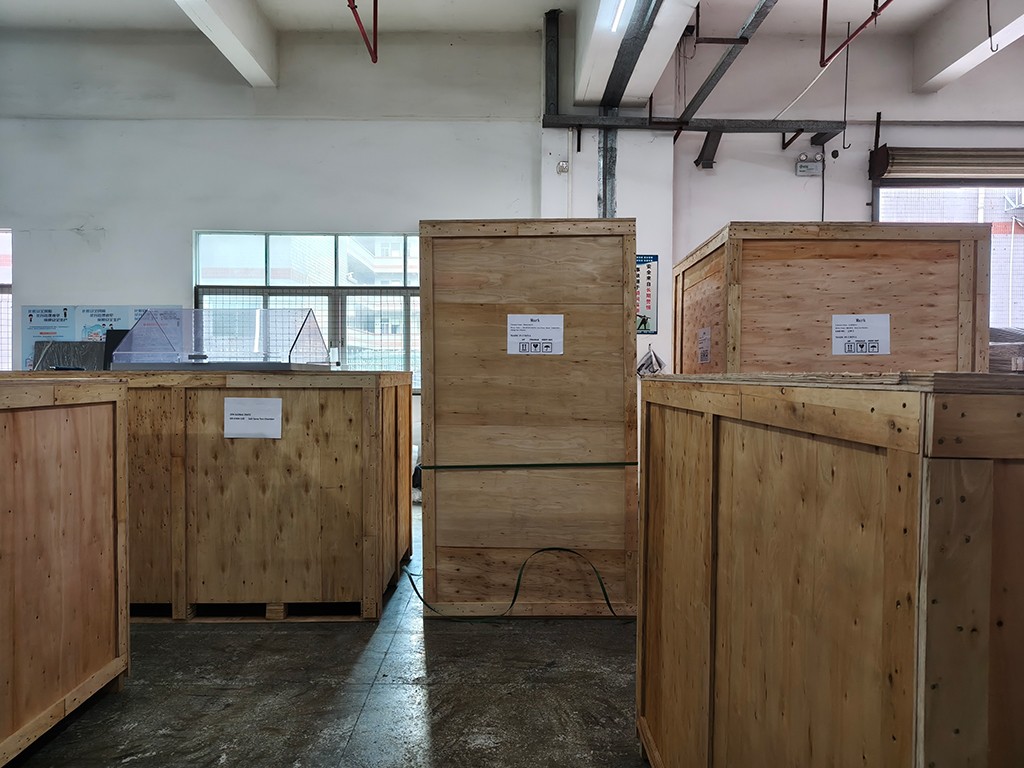
The bicycle saddle fatigue testing machine is used to test the saddle part of bicycles. The item to be tested is fixed on the machine, and the vibration force specified by the test standard is applied ...
The bicycle saddle fatigue testing machine is used to test the saddle part of bicycles. The item to be tested is fixed on the machine, and the vibration force specified by the test standard is applied. It vibrates at a certain frequency and speed. After reaching the set number of times, the machine stops automatically. Then, the damage situation of the tested item is checked. The fixture of this machine adopts a mother-and-child seat structure, which can be adjusted according to different angles and saddle heights. It is suitable for the testing requirements of various shapes and sizes of seat tubes in general.
Technical parameters
| Parameter | Specification |
|---|---|
| Capacity (kgf) | 500 kgf × 2 sets |
| Test Accuracy | 5% |
| Electric Cylinder Stroke | 150 mm |
| Power Source | Electric cylinder servo control system |
| Software Interface | Feihong Control System |
| Frequency Range | 1–5 Hz |
| Force Waveform | Sine wave |
| Overall Dimensions | Test bench: 1290 × 1700 × 1930 mm (W×D×H) Main unit: 600 × 600 × 1830 mm (W×D×H) |
| Cabinet Dimensions | 60 × 61 × 181 cm |
| Weight | Approx. 160 kg |
| Power Supply | AC 220V, 15A |
Test Objective
The core purpose of this equipment is to verify the durability of the saddle assembly under simulated real usage conditions.
The main subjects and purposes of the investigation include:
1.Saddle frame strength: Verify whether the saddle bottom shell (plastic/carbon fiber/steel) shows cracks or breaks under repeated impacts.
2.Durability of the filling layer: Simulate long-term use to determine if the foam filling layer permanently deforms (sinks) or loses elasticity.
3.Surface skin abrasion resistance/tensile strength: Verify whether the skin (PVC, PU, genuine leather) cracks or comes apart at the seams under repeated stretching and friction.
4.Seat tube clamping reliability: Verify whether the locking force between the seat tube and the frame seat tube clamp is sufficient, and whether the saddle slides down or rotates under vertical impact.
5.Seat rail strength: Verify whether the metal or carbon fiber seat rail (used to connect the seat post) at the bottom of the saddle permanently bends or breaks under impact.
6.Overall structural durability: The functional integrity of each component of the saddle (such as the suspension system) after simulating tens of thousands of kilometers of riding.
Special considerations for different products/materials
1. For saddle seats of different materials
Plastic base shell saddle seats: Focus on fatigue cracks at the connection between the base shell and the seat bow, as well as whether there is permanent deformation after impact.
Carbon fiber seat bow: Carbon fiber is sensitive to point contact, and protective gaskets are needed at the clamping points of the fixture. When it fails, it often breaks suddenly, and a force sensor is required to capture the instantaneous load drop.
Leather saddle: Leather will gradually stretch with use. During testing, pay attention to the initial state and the elongation after testing, as well as whether there are cracks at the seams.
2. For different vehicle models
Shared bikes/public bikes saddles:
Super durability requirements: It needs to withstand extremely high frequencies and non-stop usage throughout the year. The number of tests is usually far beyond the standard (such as over 200,000 times).
Anti-theft/anti-disassembly structure: During testing, it is necessary to verify whether the saddle adjustment mechanism becomes loose under long-term vibration (which may affect anti-theft performance).
Mountain bike / Road bike saddle:
Balancing lightweight and strength: The focus of the test is on extreme loads (such as the impact when a flying package lands).
Multi-axis loading: It is recommended to use a multi-axis composite loading testing machine to simulate the torsion of the buttocks when rocking a baby.
Electric-assisted bicycle/commuter bicycle saddle:
Comfort and durability: Generally larger in size and with thicker filling layers. The test should focus particularly on the permanent compression set rate of the filling layer.
3. For suspended saddles
Some high-end and comfortable saddles are equipped with built-in spring or elastomer suspension systems.
The key points of the test: It is necessary to verify whether the suspension system experiences elasticity attenuation, generates abnormal noise or gets stuck after long-term operation.